



Strategy pauses Bitcoin buys, doubles buyback plan


Strategy doubled its Digital Credit Securities Repurchase Program to $2 billion on Sept. 8 after spending $176.3 million buying back STRC preferred shares instead of acquiring more Bitcoin.
- Strategy purchased no Bitcoin and sold no ATM shares during the latest weekly reporting period.
- The company spent $176.3 million repurchasing 1,810,885 shares of its STRC preferred stock during week.
- Strategy doubled its digital credit securities repurchase authorization from $1 billion to $2 billion total.
- Bitcoin holdings remained at 845,050 coins, acquired for $63.73 billion including fees and expenses collectively.
- Dollar reserves totaled $5.10 billion, while deployable USD Cash stood at $1.44 billion separately reported.
The company disclosed in an SEC filing that it repurchased 1,810,885 STRC shares between Aug. 31 and Sept. 7. It used existing USD Cash to finance the transaction.
Strategy did not buy or sell Bitcoin during the period. It also sold no common or preferred shares through its at-the-market offering programs.
The weekly activity left Strategy with approximately 845,050 BTC. The company acquired those holdings for $63.73 billion, including fees and expenses, at an average cost of approximately $75,412 per coin.
Strategy directs $176 million toward STRC buybacks
STRC, formally called Variable Rate Series A Perpetual Stretch Preferred Stock, is one of several preferred securities Strategy uses within its Bitcoin-focused capital structure.
The security carries a $100 stated amount and pays a variable cash dividend. Strategy’s official information page shows a 12% annualized dividend rate for record dates beginning in September.
Strategy has sought to keep STRC trading close to its stated amount. Buying shares below $100 allows the company to reduce the number of outstanding preferred shares while paying less than their stated value.
The average price of the latest repurchases was approximately $97.36 per STRC share, calculated from the reported expenditure and number of shares. The filing did not provide individual execution prices.
Strategy repurchased no STRF, STRK or STRD preferred shares during the week. It also made no repurchases under its separate MSTR common-stock authorization.
The company retained $1.19 billion of available capacity under the expanded Digital Credit Securities Repurchase Program as of Sept. 7. Its separate MSTR program still had its entire $1 billion authorization available.
The $2 billion authorization covers preferred securities
Strategy’s board increased the preferred securities repurchase authorization from $1 billion to $2 billion. The total includes commissions, fees, expenses and all purchases already completed under the program.
The authorization does not require Strategy to spend the remaining $1.19 billion. Future purchases will depend on market prices, available liquidity and decisions by management or the board.
Strategy created the original program as part of a wider digital credit capital framework announced on June 29. That framework gave the company more flexibility to manage discounts across its preferred securities.
The company also raised STRC’s annualized dividend rate to 12% under that framework. Strategy said it would maintain that rate until the security demonstrated “sustained, healthy trading” near $100.
That language describes a company objective rather than a guarantee. STRC’s dividend remains adjustable, and Strategy states that future cash dividends are not guaranteed.
STRC closed at $98.04 on Sept. 8, gaining 0.30% during the session, according to MarketWatch. The price remained 1.96% below its $100 stated amount but stood above the average price paid in the latest buyback.
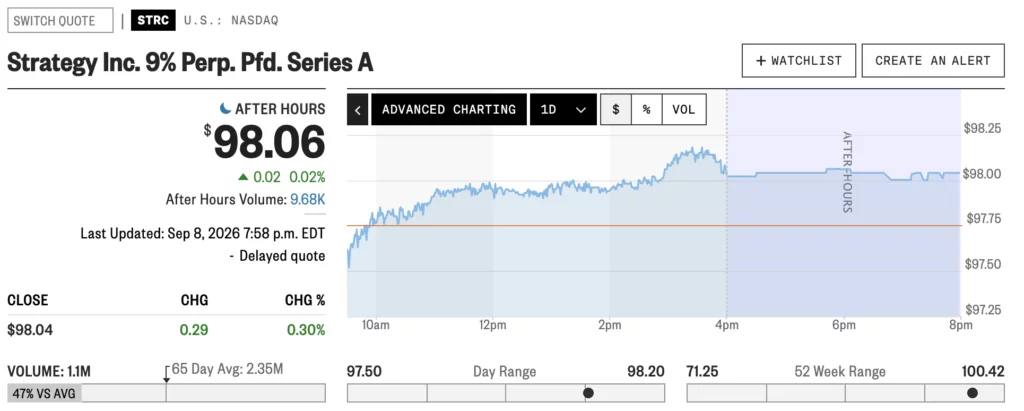
As previously reported, STRC remained below $100 despite earlier repurchases, leading Strategy to use both dividend policy and buybacks to support the security.
Strategy keeps its 845,050 BTC position unchanged
The lack of a Bitcoin purchase represents a one-week pause rather than a formal change to Strategy’s treasury policy. The company bought approximately $370 million of Bitcoin during the preceding reporting period.
Strategy’s holdings have fluctuated during 2026 as the company began using selective Bitcoin sales alongside equity issuance and cash reserves. Its capital framework permits certain sales to finance preferred dividends, repurchases and reserve requirements.
In June, Strategy held 846,842 BTC after buying 1,587 coins for approximately $100 million. In related coverage, Strategy’s Bitcoin reserve reached 846,842 BTC following that purchase.
The company subsequently sold Bitcoin during several reporting periods. One August filing showed Strategy selling 1,638 BTC for $104.7 million while directing funds toward STRC dividends, repurchases and its dollar reserve.
As crypto.news reported, Strategy used a Bitcoin sale to support preferred-stock obligations. The latest filing shows no further disposals between Aug. 31 and Sept. 7.
Strategy’s average acquisition price of $75,412 means the value of its treasury remains sensitive to Bitcoin trading around that level. The filing provided cost information but did not record an updated fair value for the holdings.
No ATM sales during the week also meant Strategy did not issue additional MSTR or preferred shares to finance Bitcoin purchases. The pause reduced immediate dilution but supplied no new capital through those programs.
Cash reserves support dividends and future purchases
Strategy reported a USD Reserve balance of approximately $5.10 billion on Sept. 7. The company maintains that restricted-purpose pool to support preferred dividends and interest payments on outstanding debt.
A separate USD Cash balance stood at $1.44 billion after the STRC repurchases. Management can use that cash for Bitcoin purchases, additional reserve funding, capital management or comparable corporate purposes.
The distinction matters because the USD Reserve primarily supports fixed financial obligations. USD Cash gives management broader flexibility but can decline when Strategy buys Bitcoin or repurchases securities.
Strategy’s USD Reserve has expanded rapidly. It stood at $3.75 billion at the end of July, when the company said the balance covered approximately 2.1 years of expected preferred dividends and debt interest.
The company did not publish an updated coverage period for the $5.10 billion reserve in its latest filing. Coverage can change with dividend rates, preferred shares outstanding, debt levels and future capital transactions.
MSTR closed at $136.52 on Sept. 8, down $6.28, or 4.40%, according to Yahoo Finance. Bitcoin and other crypto-related equities also declined during the session, preventing the move from being attributed solely to Strategy’s filing.
The next update will show whether Strategy resumes Bitcoin purchases, conducts more STRC buybacks or returns to its ATM programs. The company did not commit to a specific transaction or spending schedule.