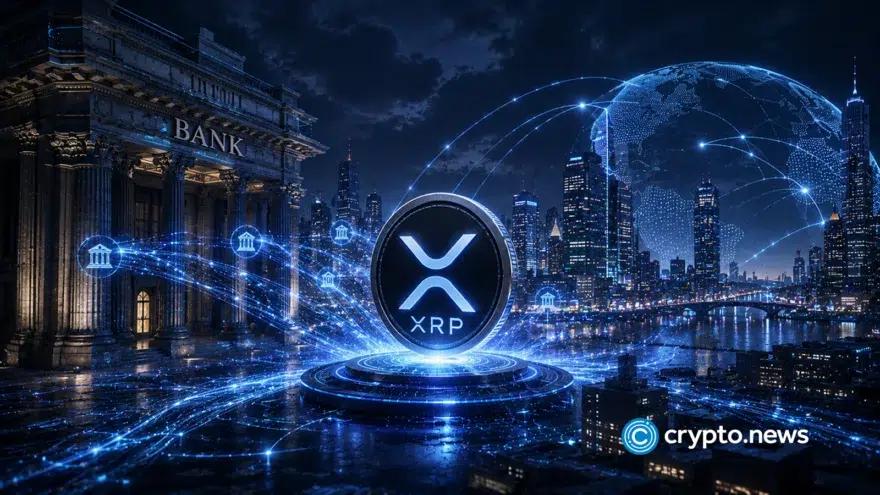



XRP Ledger’s fixes are nearly live. Why is lending still waiting?


An XRPL maintenance amendment is approaching activation on October 23, but the vault and lending proposals remain separate votes. The difference lies in what validators are being asked to authorize, and in the offchain credit judgment that protocol code cannot supply.
- XRPL’s fixCleanup3_4_0 amendment is expected around October 23, 2026, if support holds.
- A recent snapshot counted 29 validator votes for the fixes.
- LendingProtocol had 19 votes in the October 19 snapshot, 10 short of that threshold.
- SingleAssetVault was 8 votes short in the same snapshot.
- XRPL requires more than 80% support for 2 consecutive weeks before activation.
XRP Ledger validators have moved a maintenance amendment toward October 23 activation while leaving its proposed lending and vault features short of approval.
The XRPL amendment rules require more than 80% support from trusted validators for two weeks before a change becomes active. The October 19 vote snapshot showed enough support for fixCleanup3_4_0 to approach activation, with the lending proposal at 19 votes and the vault proposal still below the 29-vote level cited in that snapshot. Votes can change; an expected date is not proof that activation has occurred.
The distinction matters because some fixes in the maintenance bundle mention vaults and loans. A reference to lending code inside a fix description is not a vote to switch lending on. The planned credit system needs its own amendments. The current sequence can therefore produce an XRPL with corrected rules for existing features while native lending remains unavailable on mainnet.
October 23 belongs to the fixes, not a lending launch
The fixCleanup3_4_0 package groups corrections to transaction behavior across Single Asset Vaults, the Lending Protocol, automated market makers, the permissioned decentralized exchange, trust lines, NFTs, escrow, sponsorship, transaction signing and permission delegation. The known amendments register lists it separately from SingleAssetVault, LendingProtocol and LendingProtocolV1_1.
Some included corrections can affect behavior only once their associated feature is active. Others address functions the network already uses. Fixing a rule in code and authorizing a new product are different decisions. Validators may want precision and invariant corrections in place before enabling a vault, without treating that decision as an endorsement of the vault’s whole design or its economic risks.
The October 19 count put the lending amendment at 19 votes, 10 below the required 29 in that snapshot, and the supporting vault amendment 8 votes short. A subsequent October 20 market update identified an approximate 09:34 UTC time on October 23 for the fixes, contingent on continuing support. The clock belongs to the amendment that has already held a supermajority for the required period, not to every feature whose name appears in its description.
XRPL checks support on periodic flag ledgers, generally around 15 minutes apart. When support first crosses the threshold, a majority period begins; if it remains above 80% for two weeks, the change becomes active on a later ledger. Validators can change votes, and the count of trusted validators can change. Reporting a number without its observation date can misstate the status of an active vote.
The same voting process applied when Batch transactions went live in October. Batch’s activation did not automatically switch on lending, although the network’s September software release contained code for both types of change. Software deployment and amendment activation are separate stages.
What the proposed lending system would actually do
The base lending design would let depositors put one asset into a shared onchain vault and let a loan broker arrange fixed-term borrowing against that pool. XRPL’s lending documentation describes a vault as an onchain primitive that gathers assets and can make them available to another protocol. The LendingProtocol amendment would provide the loan mechanics.
The system is designed for uncollateralized loans, with credit assessment and risk management performed offchain. A blockchain can record terms, balances and payment events; it cannot determine from transaction history alone whether a borrower will repay. Loan brokers and their underwriting processes therefore occupy a central role even though settlement uses an onchain ledger.
That design differs from a familiar overcollateralized DeFi loan. In an overcollateralized structure, an automatic liquidation of pledged crypto can help cover a falling position, subject to market and oracle risks. An unsecured or underwritten loan exposes depositors to the borrower’s ability and willingness to pay and to the broker’s decisions. The protocol can encode an obligation; it cannot create creditworthiness.
Depositors receive vault shares representing their proportional interest in the pool, as described in XRPL’s vault specification. The value of a share depends on the vault’s assets and the treatment of outstanding loans or losses. It is not a deposit at an insured bank, nor a fixed promise that any quantity of deposited assets can be withdrawn instantly while the pool has active loans.
The design is not limited to one traded token merely because it sits on XRP Ledger. The eligible assets and lending arrangements depend on the eventual protocol, vault setup and broker. Borrowing demand for a dollar stablecoin on XRPL, for instance, would not automatically mean equivalent demand for XRP itself. Transaction fees, reserves and asset-specific liquidity would need to be measured separately from the headline count of loans.
Why the September revision changed the accounting
The version 3.4.0 release notes introduced LendingProtocolV1_1 as a revision to the original vault and lending proposals. It describes closed-ended vaults and cash-basis accounting. After the revision is enabled, new loan brokers would be created against closed-ended vaults. These are proposed mechanics awaiting the applicable votes, not current mainnet loans.
A closed-ended vault has phases for subscriptions, investment and redemption. The timetable determines when depositors can enter, when loans can be made and when assets can be returned. Those restrictions answer a genuine liquidity problem: a pool that has lent out assets for a fixed term cannot necessarily satisfy a withdrawal request as if every loan were cash.
Cash-basis accounting changes when loan income is recognized by the vault. Future interest that has not been paid does not count as realized income simply because a contract schedules it. Imagine a pool with 1,000 units of assets and a loan promising 100 units of future interest. Recording all 100 as available income before payment could make the vault appear to hold 1,100 units even though only 1,000 units of principal have been committed and the interest remains a claim. The precise live accounting is set by the amendment specification; the simplified example illustrates the difference between a promised payment and cash received.
The revision does not eliminate default risk. Recording unpaid interest conservatively helps prevent a misleading picture of assets, but a borrower could still fail to repay principal. A loan broker’s underwriting, loss provisions and recovery process determine the economic outcome. The ledger’s arithmetic can be made more precise without turning an uncollateralized loan into a secured one.
The September software coverage noted that the new lending revisions were included in available code with default votes set to no. A validator installing a version that knows about an amendment has not necessarily voted for activation. Equating code availability with network approval is the central mistake that the October sequence exposes.
The vote count reveals different decisions by validators
At the October 19 snapshot, 29 votes supported the maintenance package, 19 supported LendingProtocol and the vault proposal was 8 shy of the cited 29-vote threshold. Using the same threshold for illustration, 29 minus 19 equals 10 additional lending votes needed at that moment. The vault’s deficit of 8 implied 21 supporting votes in that snapshot. These are snapshots of votes, not durable commitments or estimates of when either feature will go live.
The difference is analytically useful without speculating about individual operators. Support for correcting transaction processing can be higher than support for deploying a new credit market. A validator might distinguish a bug fix affecting existing activity from a protocol feature that creates new loan obligations, even if the software release contains code for both. The public vote totals show the separation; they do not reveal each operator’s reasoning.
XRPL’s trusted-validator model adds a further qualification. The relevant threshold is a proportion of validators on the network’s trusted list used for amendment voting, not 80% of XRP coins or 80% of all account holders. A token holder buying XRP does not directly cast an amendment vote merely by holding it. Validator operators configure voting preferences, and the network checks their messages at flag ledgers.
Maintaining more than 80% for two weeks creates a waiting period after a supermajority is reached. A lending amendment at 29 votes today would still need to satisfy the continuity requirement before activation. The October 23 date for a fix that already passed that period cannot simply be assigned to an amendment that has yet to reach the threshold.
Builders can prepare products without opening mainnet credit
XRPL Commons and other builders have discussed applications for the proposed vault and lending framework. The October developer preparations describe testing before the vote. Test code lets a firm explore user flows and risk controls, but a working demo is not an active mainnet vault accepting customer deposits.
Firms considering deployment need to decide who originates loans, assesses borrowers, handles default and explains the share structure to depositors. The amendment can provide common transaction types without supplying the commercial parties. A lender’s underwriting policy and legal agreements would still determine how offchain repayment obligations are pursued.
The economic path from product to XRP demand is indirect. Native vaults could bring more assets or transactions onto XRPL. If borrowers and depositors use a different issued asset, loan principal and interest could move in that asset while XRP remains necessary for network-related costs and reserves. The size of those costs may be modest compared with the principal advanced. Adoption cannot be calculated by counting code commits or expected validator votes alone.
The strongest favorable case is that standardized vault and loan transaction types could lower the work required for developers to build credit products on XRPL and avoid some smart-contract-specific deployment complexity. The opposing case is that credit risk remains concentrated in human underwriting and business relationships, while an amendment vote cannot create willing, creditworthy borrowers. Both positions can be true. The eventual loan book, repayment record and depositor retention would decide whether the feature becomes used infrastructure.
First-loss capital absorbs losses only up to its own limit
The XRPL lending protocol documentation describes a broker-funded first-loss capital buffer. A loan broker places assets into a separate pseudo-account so a default can draw from that capital before the vault’s depositors absorb the same loss. This is a risk allocation mechanism, not an insurance guarantee from the network or a promise that the broker can cover unlimited defaults.
The magnitude matters. In a simplified vault with 1,000 units lent and 50 units of available broker cover, a default that causes a 20-unit loss could be absorbed within that cover, assuming the contract terms and ledger state permit it. A 100-unit loss would exceed the 50-unit buffer by 50 before other recoveries or adjustments. The example uses invented quantities solely to show the arithmetic; neither a 5% cover ratio nor those loss figures has been announced for a live XRPL vault. The actual cover rate is configurable and must be read from a particular broker’s ledger entries and agreements.
The LoanBroker entry specification records values related to first-loss capital and the lending arrangement. It gives an observer more to inspect than a product name or promised yield. A broker could contribute a visible buffer and still approve borrowers whose combined losses overwhelm it. Evaluating safety requires both the capital available now and the quality, concentration and maturity of the underlying loan book.
Default handling is an active process. XRPL’s loan-management tutorial describes marking a loan impaired when a borrower is unlikely to make a payment, applying a grace period, then defaulting the loan under the relevant conditions. Impairment is an accounting recognition of trouble, not proof that the borrower has repaid or that every loss has been realized. The broker can take steps reflected onchain, while actual collection or enforcement may involve agreements and parties outside the ledger.
A depositor assessing a production vault would need at least 4 observations: the assets deposited, the amounts on loan, the available first-loss cover and any impaired or defaulted loans. A headline annualized yield would be incomplete without them. Loan income can appear attractive while the pool is young and before obligations mature; the repayment record comes later. The sequence makes a product’s first launch a poor proxy for its long-run performance.
The design thus gives builders a common set of ledger objects and operations while leaving credit selection with a broker. Its strength is the visibility of certain balances and state transitions. Its limit is that a transparent record of a bad loan does not make the borrower good for it. Validator approval can establish the accounting rules, but only originating and servicing real loans will show how the first-loss structure performs.
Vault access and withdrawal terms shape the customer claim
A single asset vault can hold XRP, a trust-line token or a multi-purpose token, according to XRPL’s vault creation tutorial. The choice of asset changes what the depositor actually owns a claim to. A vault holding an issued dollar token exposes a depositor to that token’s issuer as well as the vault’s loans. A vault denominated in XRP has a different price exposure. Calling both an XRP Ledger lending product does not make their principal equivalent.
Access can be restricted. The tutorial shows a private vault configured with credentials, illustrating how an institution might limit eligible depositors. A permissioned vault is still represented on the ledger, but participation is controlled by rules established for that vault. A public network therefore need not imply that any wallet can deposit into every pool. The actual authorization conditions would be observable in the configuration and the product’s disclosures.
Withdrawal policy deserves the same attention as a quoted rate. In a closed-ended vault, subscriptions, investments and redemptions have defined phases. Depositors may be unable to retrieve assets while the pool funds loans, depending on the rules. In an open-ended arrangement, withdrawal could still depend on liquid assets remaining after loans have been advanced. An onchain share can be transferred or valued under certain rules without guaranteeing an immediate exchange into its original principal asset at par.
The vault data structure contains fields for available assets, assets on loan and unrealized losses. A share’s value can change as the pool receives repayments or recognizes losses. An interface that displays only the quantity of shares could make a vault appear static while the assets per share have changed. The denominator and accounting method are necessary to interpret a user’s balance.
The September V1_1 proposal changes how unpaid interest enters that calculation. Recognizing income when it arrives instead of when it is scheduled prevents a future payment from appearing as cash already earned. It does not eliminate volatility in the value of issued collateral assets or in the credit quality of borrowers. A prospective depositor would still need the vault’s asset, withdrawal policy, broker cover and legal terms.
These distinctions explain why validators might treat lending differently from a maintenance bundle. Activating a fix changes ledger processing under known conditions; activating native loan primitives permits third parties to open credit arrangements whose financial results depend on decisions made after the vote. The vote is a prerequisite for those arrangements, not an assessment of their future loan books.
Fixes include controls that deserve attention on their own
The maintenance package is not merely preparation for lending. The known-amendments list describes changes to vault rounding, automated market maker checks, pseudo-account handling and other transaction rules. Each changes processing behavior under specified conditions. A bundle spanning several feature families can attract validator approval even if the lending proposals remain contested.
For example, the vault changes refine how deposits and withdrawals round so assets cannot be delivered in the wrong quantity. Another correction permits a fixed-share withdrawal from a fully impaired vault to move zero assets instead of failing. A zero-asset withdrawal is not a promise of recovery; it is a precise way for the ledger to account for the fact that shares may have no remaining underlying value.
The package modifies an invariant tied to a vault’s maximum assets when accrued interest changes the balance. Invariant checks are safeguards against ledger states that violate accounting rules, but an overly strict check can block a legitimate transaction. Correcting one needs a validator vote because it changes how the network processes transactions. These details explain why a technical bundle has an independent reason to activate even before native lending is used commercially.
The fixes’ activation would be a real protocol event. It would not mean that depositors should send assets to an unapproved vault or that a loan broker has launched. Users should distinguish the feature’s code, its enabling amendment, any production vault and the financial agreements attached to that vault. Only the last two would provide evidence of a functioning credit market.
An October date cannot settle the credit question
As of October 22, the expected activation time for fixCleanup3_4_0 depends on validator support continuing through the final period. The lending vote and vault vote remain separate and below their respective thresholds in the cited October 19 snapshot. Live counts should be checked again before publication because an active validator vote can change within hours.
Even successful votes would not settle whether customers use the products. The proposals define transaction behavior, not a guaranteed loan book, rate, insurance arrangement or price outcome for XRP. A vault could be enabled and remain small; it could host sizable loans in issued assets without making XRP the principal asset; or a broker could attract deposits while facing repayment losses. Those possibilities require future observations and should not be reported as present facts.
XRPL’s published amendment guide says a change applies permanently to subsequent ledger versions once the required two-week supermajority is met. The network checks votes at flag ledgers, and an enabled amendment is followed by the transactions it governs. As of the October 19 count, LendingProtocol had 19 supporting votes against the 29 cited for approval.
What to watch
- October 23 activation: Verify fixCleanup3_4_0 in the live amendment record before calling it enabled.
- Lending votes: The current count and the date it first clears more than 80% determine the earliest activation path.
- Vault votes: SingleAssetVault needs its own sustained support and cannot be inferred from the fixes.
- Production pools: Published vault addresses, deposits and originated loans would demonstrate actual use after activation.
- Credit outcomes: Payment and default records would show how brokers’ underwriting works in practice.
FAQ
What is scheduled around October 23 on XRP Ledger?
The fixCleanup3_4_0 maintenance amendment was expected to activate around that date if validator support held. The date is not a scheduled lending launch.
How many validators supported lending on October 19?
The cited snapshot counted 19 supporting LendingProtocol, 10 below the 29 votes then required. The count can change.
Does a software release activate a new XRPL feature?
No. Code can ship before validators sustain more than 80% support for two weeks and the network enables the amendment.
What is SingleAssetVault?
It is a proposed XRPL primitive for pooling one asset from multiple depositors. The lending design would use such pooled assets for loans.
Are the proposed loans fully collateralized?
The XRPL lending documentation describes fixed-term uncollateralized loans with offchain underwriting and risk management. The protocol does not eliminate borrower default risk.
Why did the lending design gain a V1_1 revision?
The September 3.4.0 release added closed-ended vault phases and cash-basis accounting so future unpaid interest is handled differently from cash actually received.
Does a lending vote guarantee higher XRP demand?
No. Loan assets, transaction costs and actual usage must be measured separately; a vote itself does not create borrowers or deposits.
Where can the amendment status be checked?
XRPL’s known-amendments and network voting records should be consulted for the latest support and activation status. The October 19 figures are a dated snapshot. This is educational analysis, not investment advice.
Disclaimer: This article is for information and educational purposes only and does not constitute financial or investment advice. Figures reflect regulatory filings and reporting available at the time of writing and change with each disclosure. Nothing here is a recommendation to buy, sell, or hold any security or asset. Always do your own research. Information is accurate as of October 22, 2026.