


Best memecoins to buy in November 2026: 5 names to watch



Dogecoin, Shiba Inu, Pepe, Bonk and Floki enter November with different reasons to attract traders, from new wallet features to established communities and active trading markets.
- Dogecoin has a new MyDoge app update, while developers continue to build on the DogeOS public testnet.
- Pepe’s trading volume stands out against larger rivals, although heavy turnover does not guarantee lasting demand.
- Shiba Inu, Bonk and Floki offer different combinations of market access, community support and ecosystem products.
- Bonk has hundreds of ecosystem integrations, but regular product use and treasury controls remain important after its governance loss.
- Floki’s Valhalla game is already live, with returning players and spending offering a clearer picture of demand than promotional activity alone.
November brings a different test for each of these tokens. Dogecoin has an app update, Shiba Inu has another trading route, and Bonk and Floki have products whose use can be followed, while Pepe depends more heavily on continued trading interest.
5 established memecoins enter November
Memecoin traders have plenty of names to choose from before November. The harder task is working out what could keep people interested after the next burst of market excitement fades.
Dogecoin has new wallet features to discuss. Pepe continues to attract active trading, while Shiba Inu, Bonk and Floki have communities and associated products that extend beyond their exchange tickers.
Those differences matter because the tokens do not all rely on the same source of demand. Some buyers want exposure to a familiar meme, while others expect an application, game or payment service to bring more users.
The 5 names considered here already have established markets. That makes them easier to compare than newly issued tokens whose apparent valuations can depend on a very small amount of available liquidity.
CoinGecko’s October 29 market data put Dogecoin at about $12.2 billion, Shiba Inu at $2.85 billion and Pepe at $2.07 billion. Bonk and Floki were smaller, at roughly $267 million and $224 million respectively.
That range immediately changes the comparison. A similar dollar inflow can have a very different effect on a smaller market, although its holders may also find fewer buyers when they want to sell.
There is no dependable way to identify November’s best performer in advance. A useful comparison can instead explain why each token is attracting attention, what could strengthen that interest and where its weaknesses lie.
The market can also move all 5 in the same direction. Bitcoin’s performance and traders’ willingness to take risk may outweigh a project’s individual news for days or weeks at a time.
Dogecoin adds new app features
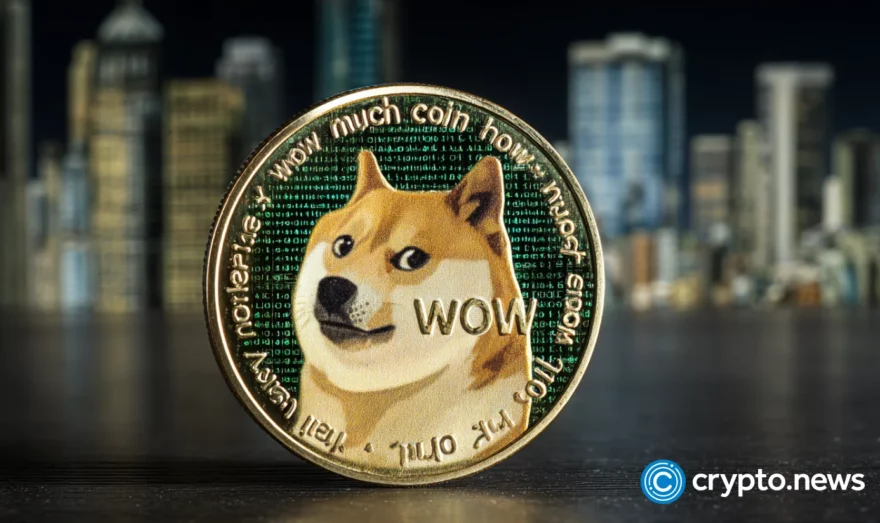
Dogecoin has the largest market value among these 5 tokens. Its long trading history and familiar identity give it a different starting point from newer memecoins that still need to establish a lasting audience.
The immediate product development is MyDoge V3. The team says the updated app is live on iOS and Android, with features that expand its role beyond holding and sending DOGE.
The update includes swaps and access to applications and campaigns associated with DogeOS. It gives existing wallet users more ways to explore the ecosystem without first finding a separate service.
That is a practical improvement in access. Whether it leads to lasting demand for DOGE depends on what those users do after opening the app.
A swap feature can be useful without requiring someone to hold substantially more DOGE. A campaign can attract participants who leave once its rewards end.
The stronger outcome would be repeat activity from users who continue to find the services useful. Payments, application transactions and fees would offer a more direct connection between the product and the token.
DogeOS itself remains another part of the story. Its developer documentation describes an Ethereum compatible application network built around Dogecoin, with a public testnet available as development continues towards mainnet.
A testnet lets developers try applications before production use. It does not establish how much real money users will commit or how many fees the network will generate after launch.
DOGE therefore enters November with both a current app update and an unfinished network rollout. Progress on either could bring attention, while delays or weak repeat use would limit the argument that new products are creating lasting token demand.
Shiba Inu expands access through Solana
Shiba Inu has an established holder community and a large trading market relative to many memecoins. That gives it continuing visibility even when attention moves towards newer tokens.
Its recent expansion to Solana through Sunrise adds another route for traders to reach SHIB, according to October coverage of the token. Access through another ecosystem can make trading more convenient for users who already keep assets there.
The effect on total demand is less certain. Some activity may come from existing holders moving between venues rather than people buying SHIB for the first time.
Cross chain access also introduces questions about how the token is represented. A trader needs the correct asset, a working redemption route and enough liquidity to move in or out without an excessive price difference.
These details become more relevant during a selloff. A market that works smoothly when demand is balanced can become difficult to exit if many holders want to leave through the same route.
Shiba Inu’s ecosystem also has the continuing recovery process associated with the earlier Shibarium bridge incident. The project’s SOU dashboard and contribution page provide the public routes associated with that programme.
A new listing does not settle an older claim. For affected users, actual repayments matter separately from whether SHIB becomes easier to trade elsewhere.
The November case therefore involves access and confidence at the same time. New markets can attract interest, while progress on outstanding obligations can influence how existing users view the ecosystem.
SHIB’s low unit price should not be confused with a small valuation. Its large supply means that even a tiny quoted price represents a substantial total market value, so targets based only on removing zeros leave out the most important arithmetic.
Pepe attracts heavy trading
Pepe offers a more direct example of a memecoin whose appeal rests heavily on attention and trading. It does not need a new application launch for traders to become interested in its price.
CoinGecko’s October 29 snapshot showed about $823 million in reported 24 hour PEPE volume. That exceeded Dogecoin’s roughly $472 million, despite DOGE’s much larger market value.
The difference shows how active PEPE trading was during that period. It does not tell us how many distinct buyers participated or how long they intended to hold.
The same tokens can change hands repeatedly. Market makers, arbitrage traders and short term speculators can contribute substantial turnover without building a long term position.
For November, that trading interest is still relevant. An established market can attract traders who want an asset they can enter and exit more easily than a newly issued token.
However, reported volume and available liquidity are different. The amount traded over a full day can be much larger than the orders waiting near the current price at any particular moment.
A large sale may therefore move the market even when the daily turnover figure looks impressive. That becomes more likely when volatility causes market makers to reduce the size of their quotes.
PEPE’s appeal also makes it sensitive to changes in attention. A competing token, a fading social media narrative or a general retreat from risk can remove demand quickly.
The absence of a product timetable does not prevent a rally. It does mean that the near term case relies more directly on traders continuing to value the meme and supply liquidity.
PEPE belongs in the November comparison because of that established trading activity. Its strongest evidence is the market already operating around it, while its main uncertainty is how long that interest will last.
Bonk’s ecosystem needs regular users
Bonk has developed a wide presence within Solana’s memecoin market. Its official website describes more than 1.1 million holders and over 400 integrations across its ecosystem.
Those figures come from the project and describe different types of activity. Holding a small token balance, using a trading tool and returning to a game each week are not equivalent forms of activity.
Even so, the range of associated services gives BONK more possible points of contact with users. Someone may encounter it through a wallet, exchange, trading product or community campaign.
The next question is what that contact requires from the token. A service can display BONK or accept it as an option without creating substantial continuing demand.
Revenue can also belong to the company or operator providing the service. Token holders do not automatically receive a share merely because the product uses the same branding.
Bonk’s governance history adds another consideration. Crypto.news’ examination of the BonkDAO attack described a roughly $20 million treasury loss through a governance proposal in July.
That episode makes control over treasury spending relevant to the November outlook. Users and holders have a reason to care about who can approve transfers and what changed after the loss.
More integrations cannot answer those questions on their own. A project can expand its products while still needing to improve the rules governing its shared funds.
BONK’s smaller valuation may attract traders looking for more volatile exposure to a Solana recovery. The same size can make sharp reversals harder to absorb when demand fades.
BONK benefits from an active ecosystem and a familiar name within Solana. More regular product use could bring demand, while clear treasury reporting and stronger spending controls would help address concerns after the loss.
Floki’s Valhalla game puts player activity in focus
Floki has an operating game to place alongside its memecoin identity. Valhalla’s documentation describes the role intended for FLOKI within that ecosystem.
The game launched before November 2026. Its earlier tournament coverage makes clear that this is an existing product, rather than a first launch still waiting to happen next month.
That changes what matters for the token. The initial release is no longer the main question; repeat play and spending offer a better indication of whether the game is finding a lasting audience.
Promotions can help attract people to try a game. Prize pools can also bring users whose main interest is the reward, which makes activity after the campaign more informative.
A returning player is more valuable to the product than an account that opens once and disappears. Several weeks of repeat engagement would tell more about the game’s appeal than a single busy launch day.
The connection to FLOKI matters as well. A successful game can build a brand without requiring players to maintain much exposure to its associated token.
Payments, fees and other token requirements determine how closely those outcomes are linked. Users who spend FLOKI regularly would support a more direct demand argument than downloads alone.
Floki also lists other services on its official website. Each has its own users and economics, so their activity should not be combined into an assumed return for every token holder.
FLOKI enters November as the smallest market among the 5 in this comparison. That may appeal to traders seeking a larger percentage move, but it also leaves the token exposed to abrupt changes in liquidity.
Its clearest distinction is an existing game that can be assessed through ongoing use. The price case becomes stronger only if that use translates into demand that matters for the token itself.
Why does supply matter more than the number of zeros?
A low unit price can make a memecoin look cheap. The impression becomes misleading when the token has hundreds of trillions of units in circulation.
Market value is the quoted price multiplied by circulating supply. A token priced at a tiny fraction of a cent can therefore already represent billions of dollars.
The same arithmetic applies to a target. A proposed price needs to be multiplied by the relevant supply before it can be compared with other cryptoassets.
That does not create an exact valuation model. It does prevent a target from sounding modest merely because the proposed unit price remains below $1.
Supply changes also need context. Dogecoin continues to create coins through mining, while tokens on other networks may have fixed supplies, burns or allocations that become available over time.
A burn removes tokens, but its scale matters. A large sounding number can still be a very small fraction of the total supply.
The source of the burned tokens matters too. Tokens bought using recurring revenue tell a different story from coins removed from an allocation that was not actively trading.
Concentration adds another risk. A few large holders can release enough supply to overwhelm demand, especially if the available order books are thin.
Exchange wallets can make that distribution harder to interpret because they may hold tokens for many customers. A large address is therefore not automatically a single investor, although its role still needs to be understood.
For November’s comparison, supply explains why these assets cannot be judged by price alone. A stronger community or a new product may attract buyers, but the market still needs to absorb the tokens existing holders and other sources make available for sale.
Bitcoin and interest rates could affect memecoin prices
Memecoins can rise together when traders become more comfortable taking risk. Bitcoin strength often brings attention back to crypto, and some of that interest can move towards more volatile assets.
The reverse can happen quickly. A sharp Bitcoin decline can prompt traders to reduce smaller positions first, even if those projects have released encouraging news.
The Fed’s October 28 decision left US rates at 3.75% to 4%. With 2 policymakers preferring an increase, the announcement did not promise an immediate easing cycle.
That matters to the environment in which these tokens trade. Higher yields and uncertainty about policy can leave investors less willing to maintain speculative positions through losses.
Individual catalysts can still make a difference. A useful application update, a new trading venue or sustained game activity may bring demand to one token while others remain quiet.
However, the timing of the announcement can be deceptive. Traders may buy before the event and sell when it arrives, leaving a successful release accompanied by a falling token price.
Leverage can amplify those swings. A crowded position may unravel when prices move against traders, causing forced sales that have little to do with a product’s progress.
Holding several memecoins does not necessarily spread that risk widely. Their different brands and networks may still leave them exposed to the same retreat from speculative trading.
The more useful comparison combines each token’s own developments with market conditions. An active project can struggle in a weak market, while a token with little new activity can rise during a speculative surge.
Both will affect November’s prices. A project may release useful products, but its token still needs willing buyers and enough trading liquidity for the rally to last.
Different reasons to follow each token
Dogecoin has the most immediate app development through MyDoge V3, alongside the continuing DogeOS testnet. Its opportunity is to turn that wider access into repeat use.
Shiba Inu has another trading route through Solana and an established holder base. Its ecosystem also needs continuing progress on the recovery process associated with the earlier bridge incident.
Pepe has the clearest case built around active trading. Its large turnover can attract speculators, while its dependence on attention leaves it vulnerable when that activity fades.
Bonk offers a large collection of integrations within Solana. The value of those connections depends on actual use, alongside the governance work needed after the treasury loss.
Floki has a live game whose audience can develop beyond its original launch. Returning players and spending offer a more useful indication of progress than another promotion alone.
None of these advantages establishes which token will rise most in November. The category can reward a simple meme more strongly than a complex product, particularly when traders are moving quickly between narratives.
The practical difference is that each name has a specific reason to follow it. Their progress can be compared with their own starting position, rather than judged solely by whether the whole market has gone up.
What to watch
- DOGE app use: Watch whether MyDoge and DogeOS attract regular users who buy, hold or spend DOGE.
- SHIB trading: Follow liquidity across supported networks and progress on the Shibarium recovery programme.
- PEPE liquidity: Watch whether buy and sell orders remain available when prices move sharply.
- BONK and FLOKI activity: Follow regular BONK product use and returning Valhalla players after promotions end.
FAQ
Which coins does this feature cover?
The feature compares Dogecoin, Shiba Inu, Pepe, Bonk and Floki. Each already has an established trading market, but the reasons people follow them differ, from Dogecoin’s app development to Pepe’s trading activity and Floki’s game. The list is a comparison of those developments and their risks. It does not rank the tokens by expected returns or identify which will perform best in November.
Is a low unit price a sign of value?
No. A token can cost a fraction of a cent and still have a market value of billions of dollars if its circulating supply is large enough. The quoted price alone says little about how cheap or expensive it is. Supply, demand and available liquidity all matter. A price target also needs to be considered alongside the market value it would imply, rather than judged by how many zeros disappear.
Does DogeOS guarantee DOGE demand?
No. A testnet gives developers somewhere to try applications, but it does not show how much people will use those applications after launch. New wallet features can also be useful without requiring users to hold much more DOGE. The stronger evidence would be regular activity that requires people to buy or spend the token. That connection needs to be assessed separately from downloads, announcements and promotional campaigns.
Does another chain’s SHIB listing create new supply?
Not necessarily. A token represented on another chain may be backed by existing tokens held elsewhere, so the additional trading route does not automatically mean more SHIB has been created overall. The answer depends on the arrangement used for that particular asset. Holders need to understand what backs it, how it can be redeemed and whether the supported route is different from an unrelated token using the same name.
Does PEPE have a confirmed November upgrade?
This feature does not identify a confirmed November upgrade for PEPE. Its November outlook is based mainly on its existing trading market and the attention it continues to attract. That does not prevent the price from rising, but it means a rally would depend more heavily on traders continuing to buy. High trading volume can show interest without establishing how long buyers intend to hold the token.
What matters for BONK?
BONK’s integrations matter most when they lead to products that people use regularly and activity that creates demand for the token. A large number of partnerships or supported services does not by itself show how much BONK users need to buy. Trading liquidity and treasury governance also matter. Holders need buyers when they want to sell, while the earlier governance loss makes controls over shared funds another issue to follow.
Has Valhalla already launched?
Yes. Valhalla is already live, so November’s question is whether the game can retain players and encourage regular spending after its earlier launch and tournaments. Another promotion alone would not answer that. Its effect on FLOKI also depends on how the token is used. A game can attract an audience without creating much additional token demand if players do not need to buy or spend FLOKI regularly.
Is any of these a guaranteed buy?
No. Established communities, active trading and working products do not guarantee a higher token price. Existing holders can sell, attention can move to another project and a weak Bitcoin market can put pressure on the whole category. Smaller memecoins can also move sharply when few buyers or sellers are available. The developments covered here explain why these tokens are worth following, rather than promise that buying them will produce a profit.
Disclaimer: This article is for information and educational purposes only and does not constitute financial or investment advice. Figures reflect regulatory filings and reporting available at the time of writing and change with each disclosure. Nothing here is a recommendation to buy, sell, or hold any security or asset. Always do your own research. Information is accurate as of October 29, 2026.