


Pump.fun unlocks $86M in PUMP as three-year vesting begins

Pump.fun has completed its first major team and investor token distribution after a one-year lockup ended.
- Pump.fun unlocked 57.279 billion PUMP tokens worth $86.49 million across 121 team and investor wallets.
- The first distribution follows a one-year lockup and begins a three-year vesting cycle for insiders.
- Unlocked tokens became transferable, but on-chain movements do not confirm recipients sold them into markets.
On-chain tracking showed 57.279 billion PUMP tokens, valued at about $86.49 million at the time of the transfers, moving to 121 wallets on July 15.
Wu Blockchain reported that the transfers marked the start of a three-year vesting period for team and investor allocations. The event makes a large amount of previously locked PUMP transferable, although wallet distributions alone do not show whether recipients intend to sell.
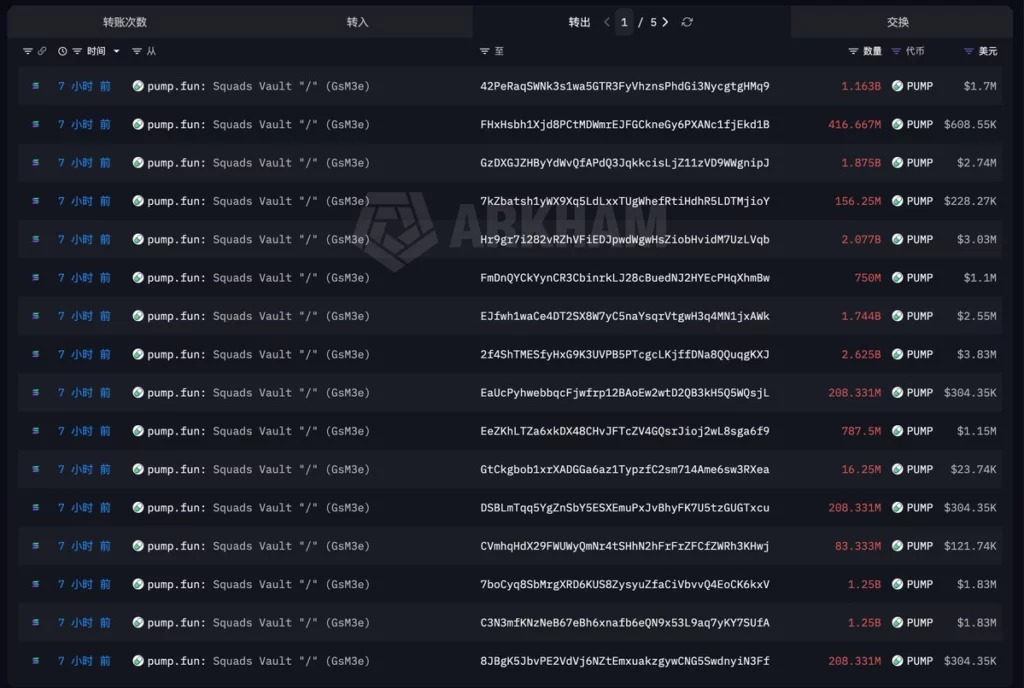
Source: EmberCN
Pump.fun distributes 57.279 billion PUMP
On-chain analyst Yu Jin tracked two large sources behind the distribution. One address released 52.039 billion PUMP worth about $78.58 million, while another released 5.24 billion tokens valued at approximately $7.91 million. The tokens then moved across 121 wallets.
The first distribution represents about 14% of PUMP’s current circulating supply of roughly 400 billion tokens. CoinGecko showed PUMP trading around $0.0016 after the unlock, with the token still recording a double-digit 24-hour gain when checked. The price action shows that an unlock does not automatically result in immediate selling.
Three-year vesting period begins after one-year lockup
The distribution comes one year after Pump.fun launched PUMP through a major token sale. As previously reported, the project’s original token allocation reserved 20% of supply for the team and 13% for existing investors.
The latest on-chain data indicates that those allocations have now entered their three-year release period after the initial one-year lockup. The full amount will not necessarily enter circulation at once. Vesting schedules typically release tokens in stages, while the recipients decide whether to hold, transfer or sell their unlocked assets.
Actual distribution follows closely watched PUMP unlock
The event had been on traders’ calendars before the first transfers appeared. As previously reported, scheduled data had pointed to an 82.5 billion PUMP unlock worth about $130 million around the end of the initial cliff. The first observed team and investor distribution instead moved 57.279 billion tokens across 121 wallets.
The difference shows why scheduled unlock figures and on-chain token movements may not always match on a specific day. Unlock calendars track when tokens become eligible for release, while blockchain transfers show when assets actually move between addresses. Further distributions may therefore remain possible during the wider vesting cycle.
PUMP supply pressure meets strong market activity
The unlock adds new potential supply at a time when PUMP continues to see active trading. CoinGecko recorded more than $100 million in 24-hour volume when checked, with the token’s market capitalization near $650 million and around 400 billion tokens listed as circulating.
Pump.fun has also used token buybacks to reduce available supply. Earlier crypto.news coverage tracked the program after it began buying PUMP from the market in 2025. The latest unlock creates the opposite supply force by making previously restricted team and investor allocations transferable.
The key question for the market is how recipients handle the newly available tokens. Distribution to 121 wallets does not prove that 57.279 billion PUMP has entered exchanges or been sold. Further wallet movements and exchange deposits would provide clearer evidence of whether the unlock is creating direct selling pressure.
With the one-year lockup now over, PUMP has entered a longer period of scheduled team and investor vesting. Traders will now watch subsequent distributions, exchange inflows and trading volume as more allocated tokens become available over the next three years.