


SEC opens door to public token sales, but ICO demand has moved on: Bloomberg


The US Securities and Exchange Commission has proposed allowing crypto projects to raise up to $75 million annually without full registration, reopening public token fundraising at a time when investor demand for new tokens has fallen sharply from the ICO boom.
- The SEC has proposed exemptions allowing crypto startups to raise up to $5 million and larger projects up to $75 million without full registration.
- Investor demand for new tokens has fallen sharply since the 2018 ICO boom as capital has concentrated around major crypto assets and other speculative markets.
- Venture investors say clearer rules could help legitimate token projects raise capital in the US, though fundraising is no longer the industry’s most pressing regulatory issue.
- The proposal would create a path for tokens to leave investment contract treatment once issuers complete or permanently cease the managerial work promised to investors.
According to Bloomberg, the proposal could restore a legal route for US investors to participate in public token sales after years of enforcement actions effectively pushed much of the business offshore, but venture investors question whether the market that fueled the 2017 and 2018 ICO frenzy still exists.
The SEC unveiled Regulation Crypto Assets on Aug. 18 with two exemptions covering investment contracts involving crypto assets. An early stage startup exemption would permit projects to raise up to $5 million over four years, while a separate fundraising exemption would allow issuers to collect as much as $75 million during any 12 month period.
Both routes would require issuers to provide disclosures to investors, while projects using the larger exemption would need to provide financial statements and meet ongoing reporting requirements.
The proposal is now open for public comments for 60 days following publication in the Federal Register.
SEC token rules could reopen public crypto fundraising
Public token sales were one of crypto’s main fundraising methods during the last market cycle before regulators began pursuing issuers over unregistered securities offerings.
ICOs raised about $3 billion in January 2018 alone at their peak, Bloomberg reported. Projects could attract capital with little more than a white paper and a newly issued token, with buyers frequently betting on the token rising once it reached secondary markets.
Failed projects, falling crypto prices, pump and dump schemes and regulatory lawsuits eventually brought much of that activity to an end.
Under the SEC’s new proposal, projects would face a more structured process. Principles based disclosures would apply to both exemptions, while federal antifraud and antimanipulation provisions would continue to cover participating issuers.
The rules follow months of work by the SEC to build a dedicated framework for crypto fundraising. Crypto.news previously reported in July that the agency had placed Regulation Crypto Assets on its 2026 rulemaking schedule after the framework advanced through White House review.
The proposal contains another provision addressing what happens after tokens are initially sold.
A conditional safe harbor would allow a crypto asset to stop being subject to an investment contract once an issuer has completed or permanently ended the essential managerial work it promised investors. The mechanism would separate the original fundraising contract from the crypto asset after the conditions of the safe harbor have been met.
An earlier SEC safe harbor framework submitted for White House review in April laid out the startup exemption, fundraising exemption and a route for assets to leave investment contract treatment.
New token sales would enter a different crypto market
Making public token fundraising available again does not guarantee projects will find the same pool of buyers that powered the previous ICO cycle.
Investor activity has become concentrated around Bitcoin and a smaller group of established crypto assets, while speculative traders have gained access to products including perpetual futures and prediction markets. Artificial intelligence linked stocks have become another destination for risk capital, according to Bloomberg.
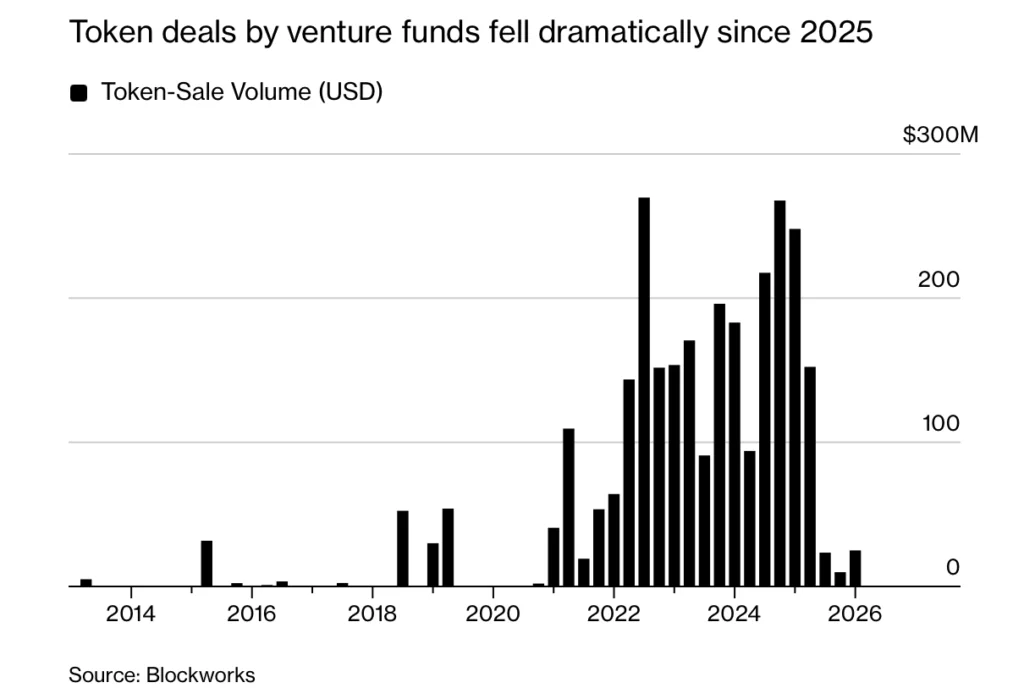
Crypto venture firms have changed their investment strategies as well. Token deals have fallen from earlier levels, while some large crypto investors have expanded into artificial intelligence, robotics and other technology sectors.
April fundraising data offered another view of where capital has been going. Crypto companies raised about $860 million across 55 disclosed deals that month, with centralized finance accounting for roughly $606 million, according to crypto fundraising data previously reported by crypto.news.
Infrastructure projects raised about $105 million and decentralized finance companies attracted roughly $90 million. Two centralized exchanges accounted for around $580 million, or about 67% of the month’s disclosed total, while prediction market and AI projects attracted early stage investment.
For newly issued tokens, the competition for speculative capital therefore extends across several markets that either did not exist or were far smaller during the ICO boom.
“ICOs of 2026 are not the ICOs of 2018,” GSR research analyst Carlos Guzman told Bloomberg. “The days when a white paper and a dream were enough to attract capital are over.”
Dragonfly general partner Tom Schmidt raised a similar concern over the timing of the SEC proposal, arguing that market structure questions have become more pressing for the industry.
“It’s obviously better than nothing, but would have been helpful to have this a few years ago versus now, where the most pressing items are things that CLARITY was supposed to answer, and less on fundraising,” Schmidt said.
CLARITY Act remains part of the regulatory question
The SEC proposal is moving separately from the Digital Asset Market CLARITY Act, leaving Congress to determine the longer term division of regulatory authority over crypto markets.
The CLARITY Act would divide digital assets into statutory categories and assign regulatory responsibilities between the SEC and Commodity Futures Trading Commission. The legislation has faced delays in the Senate despite advancing through earlier stages of the legislative process.
Senate Republicans released a 616 page merged draft in July that combined Banking and Agriculture committee provisions. The text divided digital assets into digital commodities, investment contract assets and permitted payment stablecoins, with a maturity certification process allowing qualifying tokens to move from securities treatment as their networks decentralize.
Regulation Crypto Assets addresses part of the same problem through the SEC’s existing authority.
Under the agency’s proposal, the $5 million startup exemption would apply over a four year period, while the $75 million fundraising route could be used during each 12 month period. The latter would impose financial statement and ongoing reporting requirements that were largely absent from the ICO market of 2017 and 2018.
For some venture investors, having a defined route for legitimate token launches could still change how early stage crypto networks raise money in the US.
“In the midst of this sideways market, this proposal makes me cautiously optimistic around what to expect ahead for digital assets in the US,” Strobe Ventures partner Winnie Lau told Bloomberg. “It’s a step in the right direction with a pathway for early-stage teams to build token networks, raise capital, and innovate in the US.”
Pantera Capital general partner and portfolio manager Cosmo Jiang pointed to the difference between speculative memecoin launches and projects attempting to build networks with functional tokens.
“We lived in a strange world where if one launched a memecoin it was legal, but if one launched a token that actually tried to produce any value it was illegal — that’s the exact opposite of functional capitalist society,” Jiang said.
Crypto investors have become more selective
Market conditions provide another hurdle for projects considering new token sales.
Bitcoin remained down nearly 10% for 2026 despite its latest recovery, while gold had gained more than 7% for the year, according to Bloomberg data. Crypto prices were still recovering from the sharp market selloff in October, leaving investors less willing to finance projects solely because they issued a token.
The concentration of investment in established assets has not eliminated demand for crypto exposure. Exchange traded funds tracking gold and Bitcoin attracted a combined record $7 billion over the five trading days through Tuesday, Bloomberg reported.
Regulators, meanwhile, are continuing to work on rules governing how crypto assets are classified and traded after issuance. The SEC and CFTC issued a joint interpretation in March setting out categories for digital assets, while the CLARITY Act would put classifications and regulator responsibilities into federal law if Congress passes the legislation.
The Senate debate has continued into August. Senators Elizabeth Warren and Richard Blumenthal asked the SEC this month to investigate President Donald Trump’s memecoin as lawmakers remained divided over ethics provisions in the legislation, with the dispute becoming one of the issues holding up the CLARITY Act.
For projects that choose the SEC’s proposed fundraising route, compliance would begin well before secondary trading. Issuers using the exemptions would remain subject to federal antifraud and antimanipulation rules, and the larger fundraising exemption would require financial statements and continuing reports after capital has been raised.